
Last verified: April 2026
The THC Inflation Problem — InfiniteCAL 2022
In 2022, InfiniteCAL (a cannabis testing laboratory focused on analytical accuracy) published findings that quantified what the industry had long suspected: the vast majority of cannabis products on legal market shelves carry THC labels that significantly exceed their actual content. The study analyzed approximately 150 commercially available products and found that 87% tested at more than 10% above their labeled THC potency.
The average discrepancy was not subtle. Products labeled at approximately 32.2% THC tested at approximately 22.7% THC on independent reanalysis — a gap of nearly 10 absolute percentage points, representing a roughly 42% overstatement of actual content. Consumers paying premium prices for "top-shelf" 30%+ flower are, in most cases, purchasing mid-grade product with inflated numbers.
This is not random measurement error. If THC inflation were simply analytical noise, approximately half of products would test above label and half below. The overwhelming directional bias — 87% above — demonstrates systematic inflation driven by economic incentives. Higher THC numbers command higher wholesale and retail prices, and cultivators can (and do) shop for labs that consistently return higher values. The lab that reports the highest numbers gets the most business.
Lab-to-Lab Variability — The Six-Lab Experiment
The structural integrity of cannabis testing was further undermined by a simple experiment: the same cannabis flower sample was sent to six different licensed laboratories in Colorado. The returned potency values ranged from 15.8% to 22.8% THC — a spread of 7 percentage points, representing a 38% relative variation between the lowest and highest results.
In any mature analytical chemistry discipline, this degree of inter-laboratory variation would be considered a system failure. Pharmaceutical-grade analytical testing for active pharmaceutical ingredients typically achieves inter-laboratory agreement within ±2–3% relative. Cannabis testing’s 38% spread reflects the absence of standardized reference materials, validated methods, and proficiency testing requirements that are mandatory in every other regulated testing domain.
The sources of variation include: differences in sample homogenization (cannabis flower is heterogeneous — trichome density varies dramatically across a single bud), extraction efficiency, chromatographic methods (HPLC vs. GC, with different implications for decarboxylation correction), calibration standards, and — most perniciously — intentional or unintentional bias in laboratory procedures that systematically favor higher numbers.
Pesticide Testing — 78% False Negatives
If THC inflation is the most visible testing failure, pesticide testing may be the most dangerous. In a controlled experiment, spiked cannabis distillate — concentrate deliberately contaminated with known pesticides at concentrations above action limits — was submitted to five ISO-accredited California cannabis testing laboratories. The result: 78% of the samples passed — meaning the labs returned false negative results for known contaminants at known concentrations above regulatory thresholds.
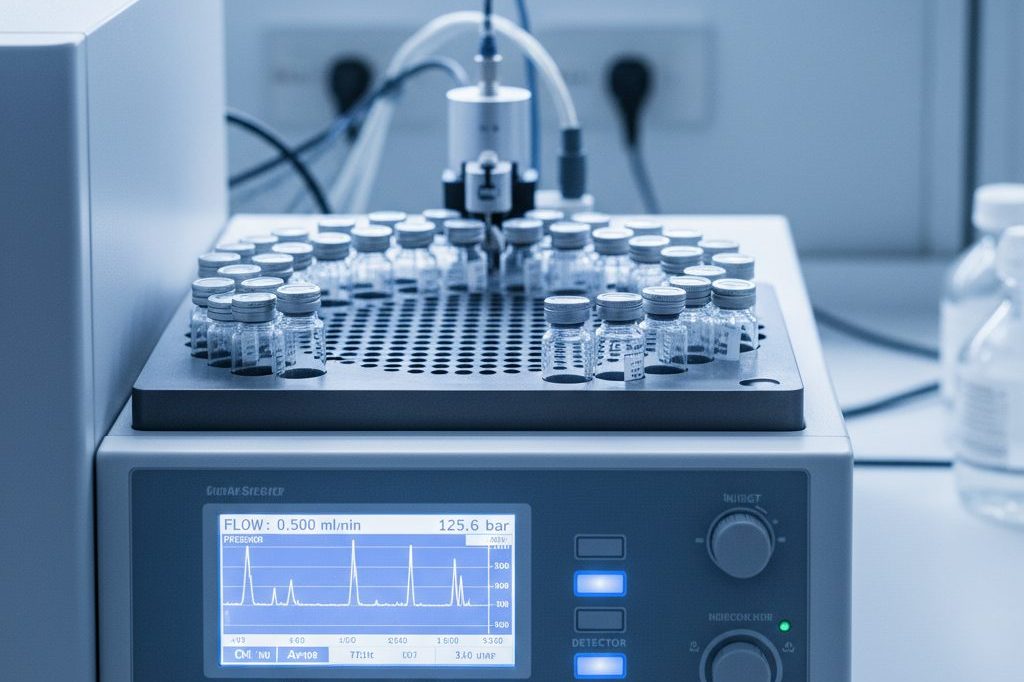
This is not a marginal analytical challenge. The spiked samples contained pesticides at levels that should have been trivially detectable by competent liquid chromatography-tandem mass spectrometry (LC-MS/MS) instrumentation operated according to validated methods. A 78% false negative rate means the testing system is, for pesticide screening, functionally non-protective — consumers cannot rely on a passing pesticide test to mean the product is actually clean.
The implications are particularly concerning for inhaled products. Pesticide residues that might be tolerable in food products (where they pass through hepatic first-pass metabolism) become directly bioavailable when inhaled, bypassing all metabolic detoxification. Myclobutanil, a common agricultural fungicide found on cannabis, thermally decomposes to produce hydrogen cyanide at combustion temperatures.
California DCC Enforcement — Labs Losing Licenses
California’s Department of Cannabis Control (DCC) has taken enforcement action that reveals the scope of laboratory malfeasance. Since December 2023, at least five laboratories have lost their licenses for testing irregularities. The discrepancies uncovered in enforcement investigations are dramatic:
- ProForma Laboratories — reported THC values of approximately 24% for flower that independent retesting showed to be approximately 16%, an 8-point inflation
- BelCosta Labs — reported approximately 24.5% THC for product that independent retesting measured at approximately 14.7–17.4%, a 7–10-point inflation
The broader regulatory picture is sobering. Of the 71 cannabis testing laboratories licensed in California since mid-2019, the attrition has been severe: 4 licenses revoked (for cause), 13 licenses surrendered (often under investigation), and 16 licenses expired (without renewal). This means nearly half of all laboratories that have ever held a California cannabis testing license are no longer operating — an industry-wide failure rate that would be unthinkable in clinical, environmental, or pharmaceutical testing.
The Structural Conflict — Who Pays the Lab?
The fundamental problem is structural conflict of interest. In the current model across all U.S. cannabis markets, the cultivator or manufacturer selects and pays the testing laboratory directly. The lab’s revenue depends on maintaining the client’s business. A lab that consistently returns lower (but more accurate) THC values loses clients to competitors willing to return higher numbers. A lab that fails products on pesticide or microbial screens costs the client money in destroyed inventory.
This is the same structural conflict that produced the 2008 financial crisis in credit ratings: the rated entity selects and pays the rating agency, creating incentive alignment between the supposedly independent assessor and the entity being assessed. In cannabis, the result is predictable — systematic THC inflation and inadequate contaminant screening.
Proposed reforms address this structural conflict:
- Blind testing — samples submitted without identifying the cultivator, so the lab cannot know whose product it is testing (eliminates direct client-favoritism bias)
- Independent reference laboratories — government-operated or government-contracted reference labs that conduct random retesting of commercial samples to detect and deter inflation
- Payment separation — cultivators pay into a pooled fund, and the regulatory agency assigns samples to laboratories, severing the financial relationship between client and lab
- AOAC/ASTM standardized methods — mandatory use of collaboratively validated methods with established performance characteristics, replacing each lab’s in-house methods
- Expanded testing panels — increasing the number of monitored analytes beyond current panels (which miss many contaminants, as the LA Times investigation documented)
Reading a COA — What Consumers Can and Cannot Know
A Certificate of Analysis (COA) is the document that cannabis testing laboratories issue with every tested batch. It typically reports potency (cannabinoid profile), terpene profile, and pass/fail results for pesticides, heavy metals, microbials, mycotoxins, residual solvents, and moisture content. Many manufacturers include a QR code on packaging that links to the COA.
What a COA can tell you: the specific laboratory that tested the product (look up their license status and any enforcement actions), the date of testing, the batch number (verify it matches the package), and the list of analytes screened. What a COA cannot reliably tell you: whether the THC number is accurate (given the inflation documented above), whether contaminants not on the testing panel are present, or whether the specific product in your hand came from the same batch as the tested sample.
Until structural reforms address the conflicts of interest and standardization gaps documented above, COAs provide a false sense of precision. They are better than no testing at all — the unregulated market has no testing whatsoever — but they are not the consumer protection guarantee that regulators and the industry present them as.
For in-depth cannabis education, dosing guides, safety information, and research summaries, visit our partner site TryCannabis.org
Related on this site: Cannabis Pesticides, Send Us a Message, Contact Us.