
Last verified: April 2026
The Dunedin Study — Meier 2012
The most influential study on cannabis and adolescent cognition comes from the Dunedin Multidisciplinary Health and Development Study, a prospective longitudinal cohort that has followed 1,037 individuals born in Dunedin, New Zealand in 1972–1973 from birth through adulthood. In 2012, Madeline Meier and colleagues (including Terrie Moffitt and Avshalom Caspi at Duke University) published findings in the Proceedings of the National Academy of Sciences (PNAS) that sent shockwaves through both the scientific community and the cannabis policy debate.
The key finding: participants who began using cannabis persistently before age 18 and continued through adulthood showed an average 8-point decline in full-scale IQ from childhood (pre-cannabis baseline) to age 38. Critically, this decline did not recover with cessation — participants who quit cannabis still showed cognitive deficits at 38. By contrast, participants who began cannabis use in adulthood (after 18) showed no significant IQ decline regardless of frequency.
Persistent cannabis use was associated with neuropsychological decline broadly across domains of functioning, even after controlling for years of education. Impairment was concentrated among adolescent-onset cannabis users, with more persistent use associated with greater decline.
Meier et al., PNAS 2012
The Dunedin study’s strength lies in its design: a birth cohort followed prospectively with repeated cognitive assessments before and after cannabis exposure, eliminating the reverse-causation problem (the possibility that lower IQ predates and predicts cannabis use). Pre-cannabis IQ scores were available for all participants, allowing true change-score analysis.
The Rogeberg Critique — Socioeconomic Confounding
In 2013, Norwegian economist Ole Rogeberg published a critique in PNAS arguing that the Dunedin findings could be explained by socioeconomic status (SES) confounding rather than a direct neurotoxic effect of cannabis. Rogeberg’s simulation model demonstrated that if adolescent-onset cannabis users were more likely to come from lower SES backgrounds, the observed IQ decline could reflect the cumulative cognitive effects of poverty, reduced educational opportunity, and environmental deprivation rather than cannabis itself.
Rogeberg did not argue that cannabis was harmless to the adolescent brain. His point was methodological: the Dunedin study’s statistical controls for SES may have been insufficient to fully account for the confound, and the observed effect size (8 IQ points) was within the range that SES differences alone could produce. This is a legitimate concern in observational epidemiology — no statistical adjustment can fully eliminate confounding in a non-randomized study, and you cannot ethically randomize adolescents to chronic cannabis exposure.
Meier and colleagues responded with supplementary analyses showing that the effect persisted after additional SES controls and that childhood SES did not fully account for the decline. The exchange illustrates a fundamental limitation of this research domain: absent randomized controlled trials (which will never exist for this question), the causal inference will always rest on observational evidence with inherent residual confounding.
Jackson & Iacono — The Twin Study
In 2016, Nicholas Jackson and colleagues (including Matt McGue and William Iacono at the University of Minnesota) published a twin-study analysis that added another layer of complexity. Using data from the Minnesota Twin Family Study, they examined IQ changes between pre-adolescence and late adolescence in twin pairs discordant for cannabis use — one twin used cannabis, the other did not.
The finding: cannabis-using twins showed IQ declines — but so did their non-using co-twins, to a statistically equivalent degree. This suggested that the cognitive decline associated with adolescent cannabis use might reflect shared familial factors (genetic predisposition, family environment) rather than a direct pharmacological effect of cannabis on the developing brain.
This is not the same as saying cannabis has no effect on adolescent cognition. It means that in this particular study design, the cognitive trajectory of cannabis users could not be distinguished from the trajectory predicted by their family background alone. The shared vulnerability model — the same genetic and environmental factors that increase cannabis use risk also independently affect cognitive development — is consistent with the data but does not exclude additive effects of cannabis itself.
The ABCD Study — The Definitive Effort
The Adolescent Brain Cognitive Development (ABCD) Study is the largest long-term study of brain development and child health ever conducted in the United States. Launched by the National Institutes of Health (NIH), it enrolled approximately 12,000 children aged 9–10 at 21 research sites nationwide and is following them through adolescence into early adulthood with repeated structural and functional neuroimaging (MRI, fMRI, DTI), cognitive testing, and detailed substance use assessments.
The ABCD study was designed specifically to address the limitations of earlier research. Its sample size provides statistical power to detect modest effects. Its longitudinal neuroimaging captures brain structural changes before and after substance exposure onset. Its diverse, population-based sample addresses the SES confounding that plagued earlier work. And its twin subsample enables the same shared-vulnerability analyses that Jackson and Iacono performed.
Early ABCD publications have reported associations between prenatal cannabis exposure and altered cortical structure, and baseline neuroimaging differences between children who will go on to initiate substance use versus those who won’t. The critical data — how cannabis initiation during adolescence changes brain developmental trajectories versus pre-exposure baseline — is still being collected and analyzed. This study will likely represent the definitive word on this question, though final results are years away.
The Neuroscience — Why Adolescence Is Different
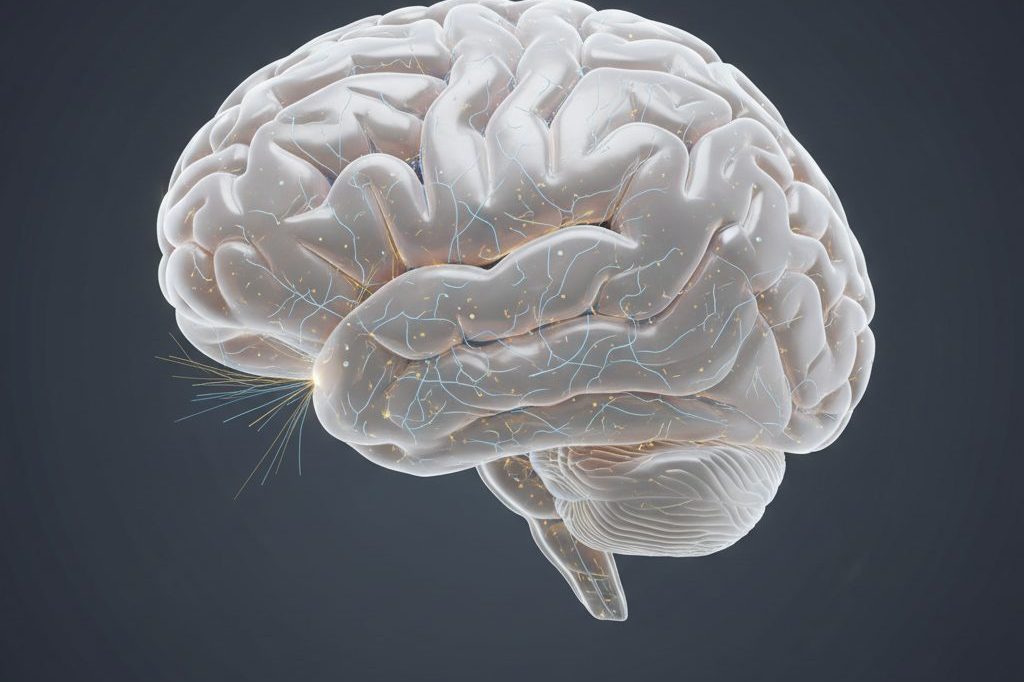
The biological plausibility of adolescent vulnerability rests on well-established neurodevelopmental science. The prefrontal cortex (PFC) — responsible for executive function, impulse control, working memory, and decision-making — is the last brain region to complete myelination, a process that continues until approximately age 25. During adolescence, the PFC is undergoing active synaptic pruning and myelination that are sensitive to environmental inputs.
The endocannabinoid system plays a critical role in this developmental process. CB1 receptors are heavily expressed in the developing PFC, and endocannabinoid signaling modulates synaptic pruning, axonal pathfinding, and cortical circuit refinement. Exogenous THC — which activates CB1 with greater intensity and duration than endogenous anandamide or 2-AG — could theoretically disrupt these precisely timed developmental processes, producing lasting alterations in prefrontal circuitry.
Animal models strongly support this mechanism. Rats exposed to THC during the adolescent-equivalent period show persistent deficits in PFC-dependent tasks, altered dopaminergic signaling, and structural changes in prefrontal cortical architecture that persist into adulthood. Whether these animal findings translate directly to human exposure patterns, doses, and developmental timelines remains the central open question.
Why 21 Is a Political Compromise
Every U.S. state that has legalized recreational cannabis has set the minimum purchase age at 21. This was not derived from neuroscience. The age threshold mirrors the federal drinking age (established by the National Minimum Drinking Age Act of 1986) and reflects political pragmatism rather than a neurobiological boundary.
If the goal were to protect the developing brain from exogenous cannabinoid exposure during the full PFC myelination window, the minimum age would be approximately 25 — the age at which prefrontal development is generally considered complete. But a minimum age of 25 would be politically unviable, culturally unenforceable (given that 18-year-olds can vote, serve in the military, and are legal adults), and would drive an enormous portion of the 18–24 demographic to the unregulated market.
The age-21 threshold represents a compromise: it is consistent with existing alcohol regulation, politically defensible, and restricts the highest-risk window (under 18) while accepting that 18–24-year-olds will continue to use cannabis regardless of legal status. The honest framing is that 21 reduces harm relative to no age restriction, but does not fully protect the developing brain as neuroscience would suggest. This is the kind of practical tradeoff that drug policy inevitably requires.
For in-depth cannabis education, dosing guides, safety information, and research summaries, visit our partner site TryCannabis.org
Related on this site: Cannabis Use Disorder Neurobiology, Cannabis Cardiovascular JAMA 2025, Cannabis Pregnancy Fetal Effects.